How Notate grew from secure notes into the document app of Bank of America, Citi and JPMorgan Chase
Since 2013, Olearis has designed, built and evolved Notate: one secure app where employees find, edit, annotate and sign company documents. It passes enterprise security reviews, deploys through the device management IT already runs, and works on iPhone, iPad, Android, Windows and Mac.
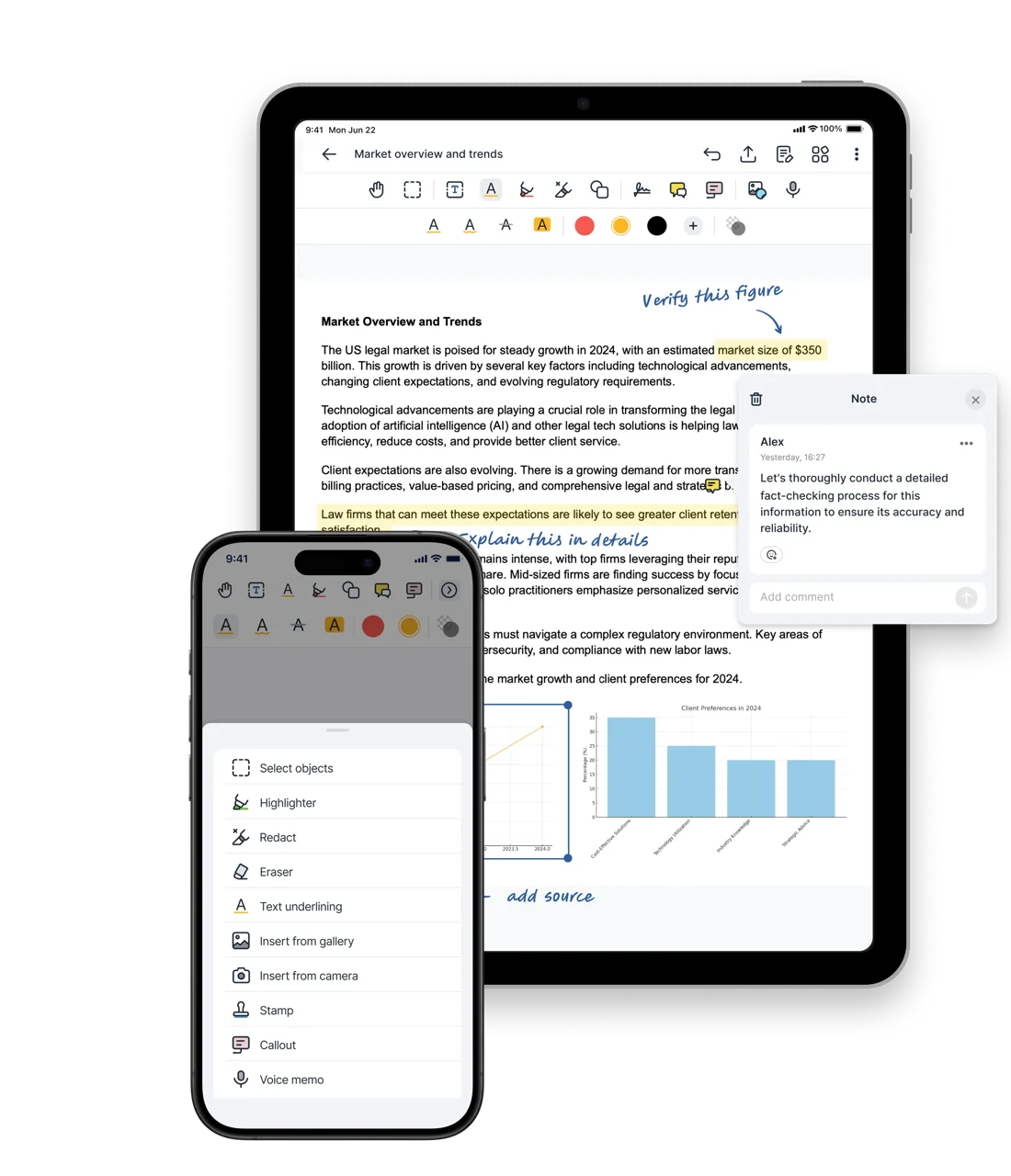
One secure app for any company document
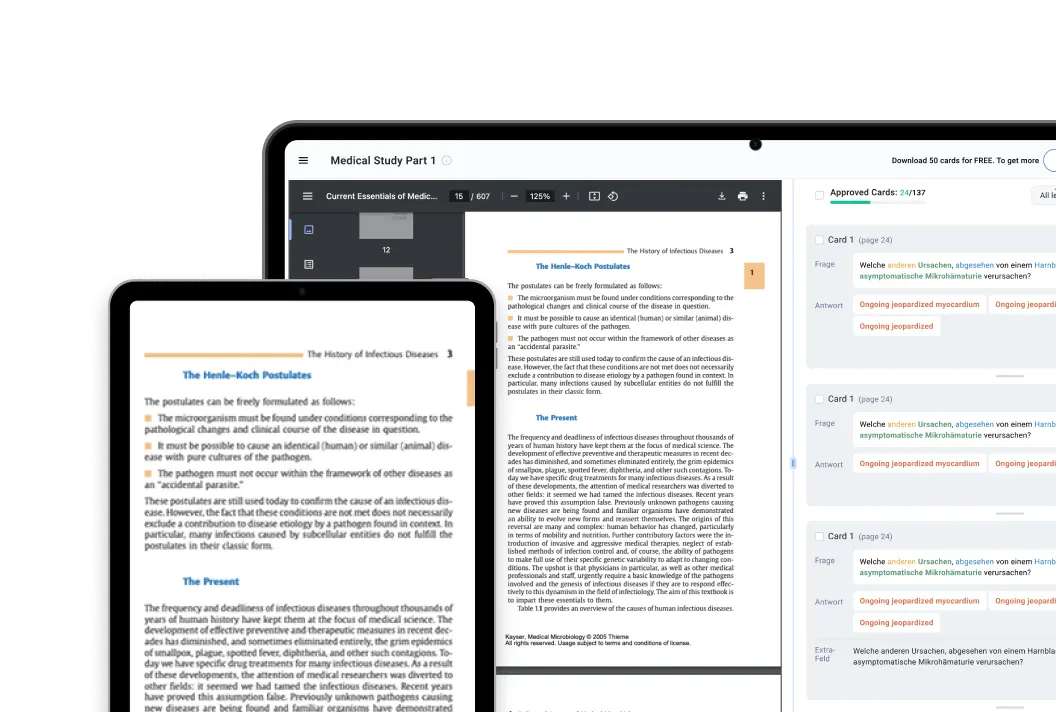
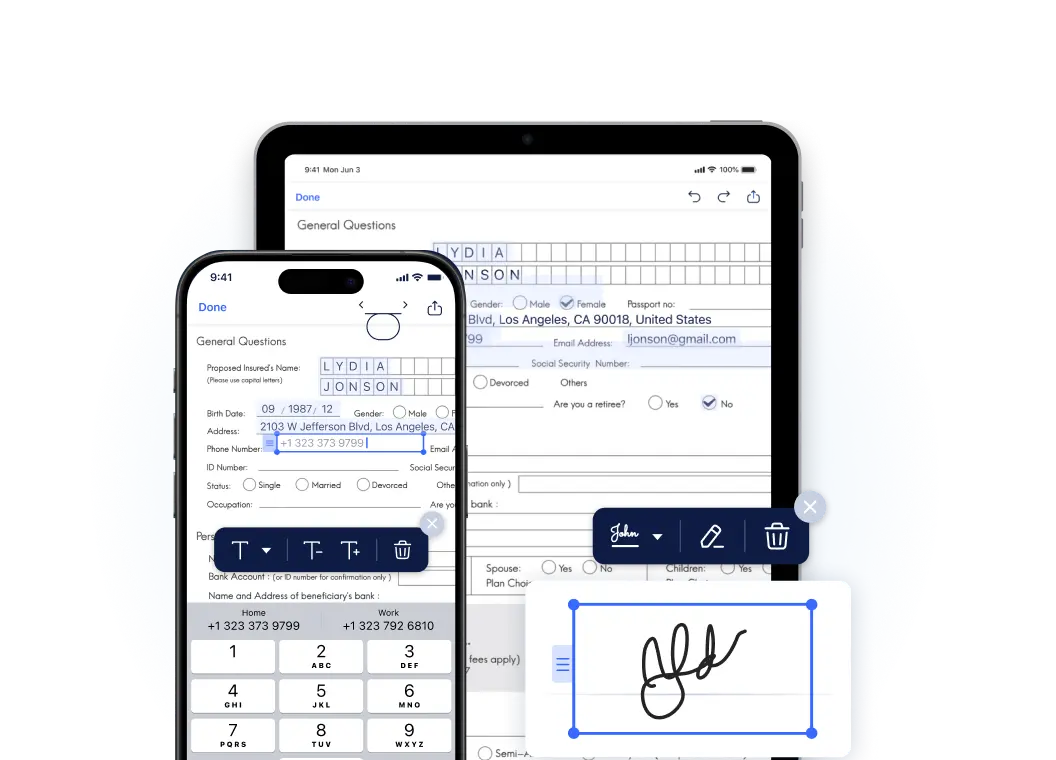
Notate gives employees one app for the document work. They find files in SharePoint, OneDrive, Teams, Exchange email, ShareFile and on-premises network shares, then edit, annotate, sign and redact PDFs, take handwritten notes, and open Office files in their Microsoft Office apps, saving each one straight back to where it lives. Nothing is migrated, IT controls every feature through its device management, and content never passes through Shafer Systems servers.
Notate is built by Shafer Systems, founded in 2012 in Dallas by Joel Shafer, former CTO of Quickoffice. The core Olearis team built Quickoffice for iOS before its acquisition by Google, and has worked on Notate since 2013. Today Olearis leads Notate’s engineering and product design, and Joel has since joined Olearis as Chief AI & Strategy Officer.
Passing the security review before you can win the deal
Banks, law firms and government agencies don’t buy productivity apps on features. A product reaches their employees only after security, IT and compliance teams approve it. For Notate, every new customer meant a new security review, a new MDM environment and new expectations, while users still wanted an editor as smooth as any consumer app.
Security as the entry ticket
Customers run their own static code analysis, Veracode among them. Code that fails these checks doesn’t ship.
Every MDM is different
Intune, BlackBerry UEM, Citrix and Ivanti (MobileIron) each have their own SDK, policies and app store. One product had to work inside all of them.
No vendor cloud
Content had to stay in the customer’s own environment, so Notate connects straight to Exchange, Microsoft 365 and on-premises file shares, with no vendor server in the data path.
Offline in the field
Bankers, lawyers and field teams work on planes and in secure rooms. Notes and edits had to sync correctly when the connection came back.
Four platforms, one experience
Documents edited on an iPad had to render the same on Windows, Android and macOS. Text and annotation rendering is hard to keep identical.
A product that keeps evolving
Over 13 years the product grew from secure notes into one app for all document work. It needed to keep growing without a costly rewrite every few years.
Five priorities that shaped every decision
Security is a product feature
Safe coding, data containment and code analysis were part of everyday development, never a pre-release checklist.
Meet IT where it already is
Integrate with the MDM, mail server and storage the customer already runs, so there is nothing to migrate and nothing new to approve.
Consumer-grade UX for enterprise users
Annotation, handwriting and page tools had to feel as simple as a consumer app, because employees choose what they actually use.
One product, many enterprise builds
A shared core with MDM-specific builds let a small team ship versions for Intune, BlackBerry UEM, Citrix, Ivanti and Microsoft 365.
Modernize without a big-bang rewrite
Moving Android, Windows and macOS to Flutter step by step cut the cost of each new feature while customers kept working.
From a secure notes app to an enterprise suite in five phases
Secure notes, everywhere
- First iOS app with notes synced through Microsoft Exchange
- Data kept inside the customer’s own environment, no vendor cloud
- Android app (May 2014)
- Windows app (November 2014)
- macOS app (December 2014)
From notes to a productivity suite
- Tasks (2015)
- Calendar, Cards and Docs apps (2017)
- Business card and document scanner
- Two-way offline sync with Exchange Server
- NotatePDF Pro: Notes, Tasks, Calendar, Docs and Cards in one app (2018)
Enterprise security and MDM
- Integrations with Microsoft Intune, BlackBerry UEM, Citrix, Ivanti (MobileIron) and AppConfig-compatible MDMs
- Separate store builds per MDM and for Microsoft 365
- Customer-requested static analysis, including Veracode
- Storage connectors: SharePoint, OneDrive, Teams, ShareFile, BlackBerry Workspaces and BEMS, SMB network shares
Modernization on Flutter
- Beta on Flutter for Windows and Android (2021)
- Official Flutter release for Android, Windows and macOS (2022)
- Native Swift and Objective-C kept on iOS where it mattered
- OneDrive storage on iOS
One secure app for every document, with AI under IT control
- Document and business card scanning on iOS and Android (2023)
- Office documents on iOS and Android (2024): opened in Microsoft Office apps and saved straight back, with Notate’s own editor for on-premises and offline work
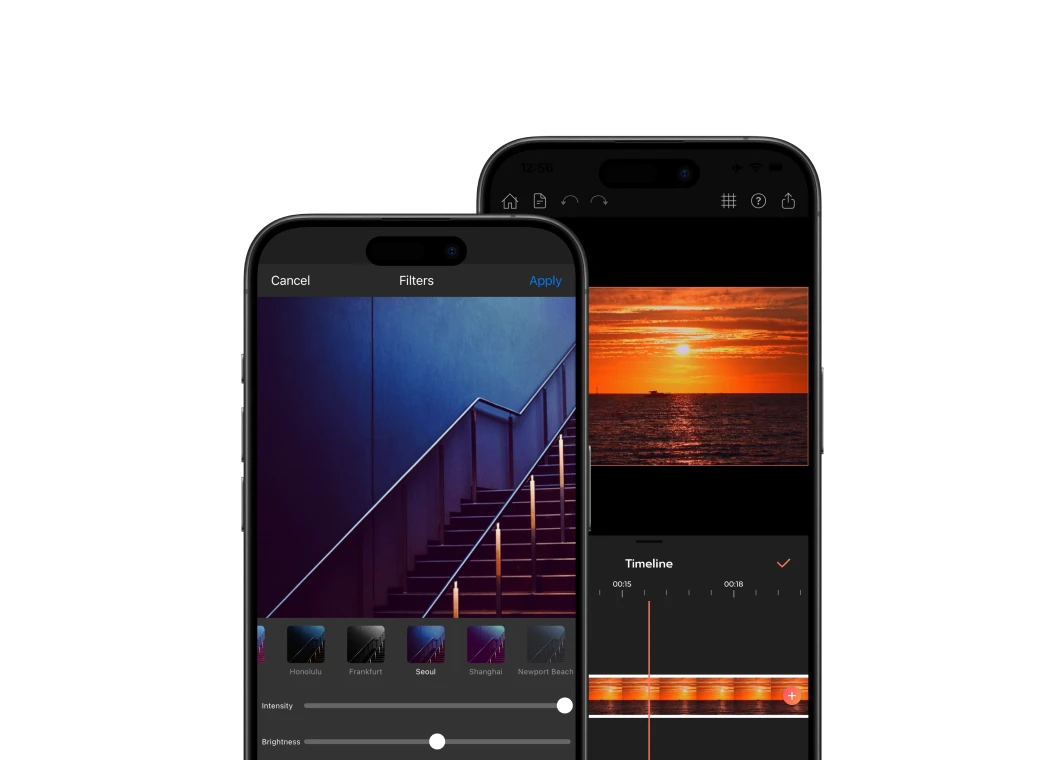
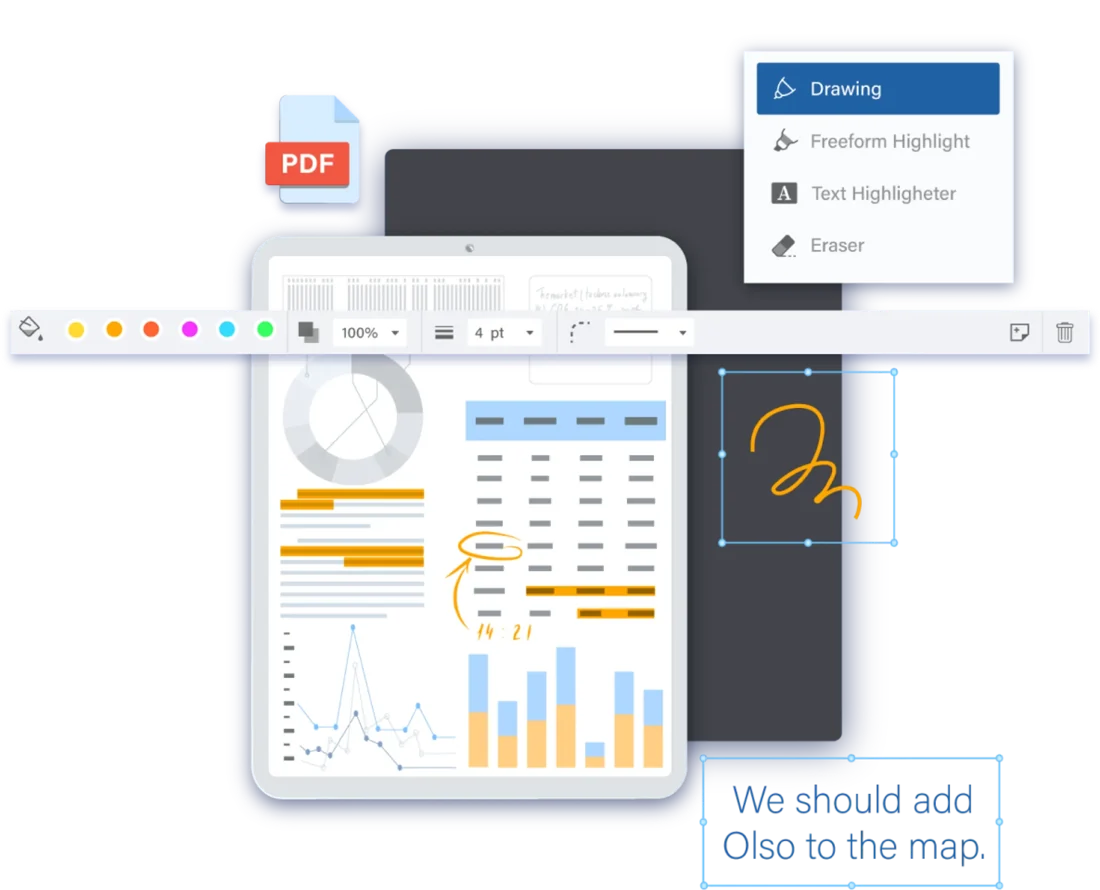
- Full PDF editor: text editing, annotation, signing, redaction, forms, page management, version compare
- Notate Desktop in the browser on Windows and Mac, nothing to install
- Exchange Web Services retirement handled: Notate Drive moves to each user’s OneDrive through one MDM policy (2026)
- AI assistant on the organization’s own Microsoft Azure AI service, under the work sign-in: IT decides when to enable it, conversations are not stored, and Shafer Systems never receives the content
- Repositioned as one secure app for any company document, across Microsoft 365 and on-premises (2026)
- Try Notate Live in the browser at app.notatepdf.com
One product team, every enterprise environment
How the product grew
Key releases from the product timeline
- 2013iOS
- 2014Android · Windows · macOS
- 2015Tasks
- 2017Calendar, Cards, Docs
- 2018Pro suite
- 2021–22Flutter
- 2024Office documents
- 2026AI on your own Azure
One core, many enterprise builds
How a small team covers every customer environment
A product that passes the review and stays in use
Notate is deployed at more than 100 enterprises across finance, legal and government, including some of the world’s largest banks and law firms. It has run inside their security environments for over a decade, maintained by the same product team that built it.
| Enterprise adoption | 100+ enterprises, including Bank of America, JPMorgan Chase, Merrill Lynch, Citi and HSBC |
|---|---|
| Partnership | 13 years with the same core team, since 2013 |
| Platforms | 4 iOS, Android, Windows and Mac, plus Try Notate Live in the browser |
| MDM coverage | 5 Intune, BlackBerry UEM, Citrix, Ivanti and AppConfig-compatible MDMs, with a dedicated build where needed |
| Security | Veracode and other customer-requested static analysis passed; Intune app protection |
| User rating | 4.4 ★ 233 ratings for Notate for BlackBerry on the App Store |
| Modernization | 3 platforms moved to one Flutter codebase in 2021–2022 without interrupting customers |
Security that sells
Passing enterprise reviews is what opened the door to banks and law firms.
Nothing to migrate
Customers keep their MDM, mail server and storage. Notate becomes the one app where the document work happens.
Lean multi-platform delivery
One core and one Flutter codebase serve many builds and platforms.
Support from the builders
Support requests go straight to the engineers who wrote the product.
The same team, for more than a decade
Enterprise mobile is our home ground
The core Olearis team built Quickoffice for iOS and supported it through the Google acquisition. Secure office documents on mobile is where the company started.
Embedded, not outsourced
Olearis leads Notate’s engineering and product design. Decisions are made by people who know the product’s history and its customers.
Security written into the code
The team knows how to write code that passes a bank’s static analysis, so security reviews don’t turn into rework.
Modernize in steps
The Flutter migration ran platform by platform, alongside regular releases, so customers never had to wait for a rewrite.
“Olearis has provided us with the best people that I’ve ever worked with. The successful development of the app is now in use by five of the top twenty global financial institutions.”
 Joel ShaferFounder & CEO, Shafer Systems (Notate)Review on Clutch
A partnership that keeps moving with the market
Notate keeps evolving as enterprise document work moves toward AI, and Olearis keeps building it.
- 01Your documents, your Azure AI, your control: AI that works on documents without sending them anywhere
- 02One workflow across Microsoft 365 and on-premises sources
- 03Solutions for finance, legal and government
- 04Notate Desktop in the browser and one cross-platform codebase
Is a security review blocking your enterprise deals?
We help B2B product teams get through enterprise procurement: MDM integration, data containment, code that passes static analysis, and a UX that employees actually use.