blog / Why 1 in 3 People Ditch Their Health Wearable, and How to Build a Connected Health App They Actually Keep

Published August 2026, based on current wearable adoption, abandonment data, and real user reviews.
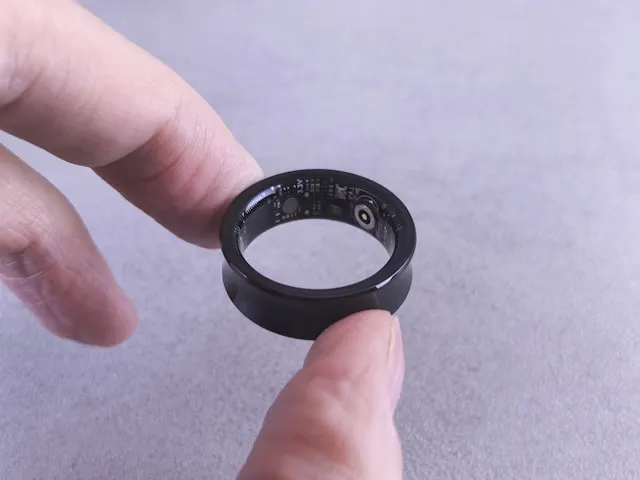
Do you wear a smart ring, a fitness band, a smartwatch, smart earbuds, or maybe a glucose patch or smart scale? Whichever one it is, right now it is quietly tracking a startling amount of you: your heart rate and heart-rate variability, your sleep stages, your blood oxygen, your steps, your stress, your body temperature, even your ECG. That tiny device knows more about your body than your last checkup did. So here is the real question, and the whole point of this article: does the app on your phone actually do anything useful with all of that, or does it just show you numbers until you quietly stop looking?
Quick answer: A connected health app turns raw wearable data (heart rate, sleep, steps, ECG, glucose) into something a person actually understands and acts on. In 2026 the hardware is everywhere, but the software mostly fails: around 1 in 3 wearable owners quit their device, and roughly 80% of users abandon a new fitness app within the first month. Apps die from data overload, generic feedback, battery drain, accuracy doubts, and privacy fears. The biggest open opportunities are the segments almost nobody builds well for: pets, children, and the elderly. This guide covers why wearable apps fail, what the reviews really say, and how to build one that lasts, with real 2026 costs.
Here is the uncomfortable truth of the wearable industry: the world is drowning in devices and starving for software that matters. People buy the watch, wear it for three weeks, get a wall of numbers they do not understand, and quietly leave it in a drawer. The device did its job. The app did not.
That gap is the entire opportunity in connected health app development right now. This article is built on real 2026 data and real user complaints, not marketing.
How Big Is the Connected Health and Wearable Market in 2026?
Enormous, and the growth is not in the hardware anymore. It is in the software that makes the hardware worth wearing.
The devices are already on people's wrists, fingers, and collars. What is missing is the intelligent layer on top. A few numbers that matter:
The elderly smartwatch segment alone is growing at over 15% a year, driven by aging populations and rising healthcare costs.
The pet wearable market was worth about $2.8 billion in 2025 and is projected to hit $7.2 billion by 2034.
Analysts across the board agree the next phase of health-app growth is powered by AI turning raw sensor data into personalized action.
Translation for a founder or business: you do not need to build a device. You need to build the software brain that a device is useless without. That software is where spends its time, and it is far cheaper to build than hardware.
Why Do People Abandon Health Wearables? (The Numbers Are Brutal)
Because the app gives them data, not meaning. And data without meaning gets boring fast.
Brace yourself for the abandonment stats, because they explain everything:
Roughly 1 in 3 wearable owners stop using the device, according to Gartner's consumer tracking.
About 80% of users abandon a new fitness app within the first month.
The average fitness app keeps just 3 to 4% of users at day 30, and around 70% quit within the first 100 days.
Fitness apps run about 9.2% monthly churn in 2026, and loss of motivation accounts for 38% of cancellations.
Read those again. This is not a niche struggling. This is an entire category leaking users through a hole in the bottom. And the hole is always the same: the app stopped being useful after the novelty wore off.
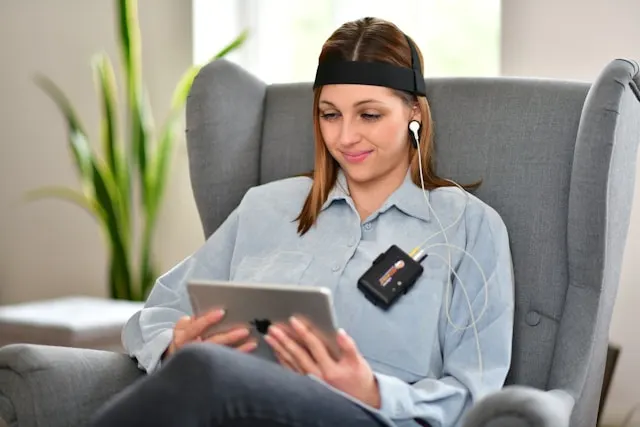
What Do the Reviews Actually Say? (The 5 Complaints That Kill Wearable Apps)
Real users leave real reasons in real reviews. Here are the five that show up again and again in 2026.
"The numbers are wrong." Accuracy is the number-one trust killer. Users report wrist-based glucose and blood-pressure readings that do not match their FDA-approved medical devices, and inconsistent heart-rate data during movement. Once a user catches the app being wrong, they stop believing all of it.
"It kills my battery." One-third of wearable owners name battery as a top complaint. GPS is the worst offender, dropping a 14-day battery to 20 to 30 hours during continuous tracking.
"Too many numbers, no idea what they mean." Data overload is the silent killer. A screen full of metrics with no interpretation is noise, and people tune out noise.
"It makes me anxious." This one gets ignored in most product reviews and it is huge. Wearables can trigger health anxiety, hypochondria, and obsessive symptom-checking. An app that scares people is an app people escape.
"Where is my data going?" Privacy fear is rising, and it is justified. Most consumer wearable makers in the US fall outside HIPAA, meaning the health data they collect is not protected the way medical data is. Users are starting to notice, and trust, once lost, does not come back.
The lesson writes itself: the winning connected health app is accurate, gentle, battery-aware, private, and above all, it tells the user what the numbers mean. Getting that right on and is the real engineering work, not the pretty charts.
What Niches Is Nobody Building For? (Pets, Kids, and Elders)
Everybody builds another step-counter for healthy 30-year-olds. Almost nobody builds well for the segments that need it most, and those segments are where the money and the meaning are.
Underserved segment | The real need | Market signal | Why it's wide open |
|---|---|---|---|
Pets | GPS, activity, and health diagnostics in a smart collar; early illness detection | ~$2.8B (2025) heading to ~$7.2B (2034) | Owners spend freely on pets; few apps turn collar data into real health insight |
Children | Safe GPS, geofencing, SOS, two-way calling, unsafe-route alerts | Rising fast on family-safety demand | Parents want safety, not surveillance; most apps get the balance wrong |
Elderly | Fall detection, medical-grade ECG, blood pressure, SpO2, medication reminders | Segment growing 15%+ a year | Design is usually built for the young, not for the actual user or their caregiver |
The pattern is clear. These users are not chasing another vanity metric. They want safety, early warning, and peace of mind, for a pet, a child, or an aging parent. Building for a caregiver, not just the wearer, is the design insight most teams miss. This is squarely where create genuine value, and where competition is thin.

What Does a Connected Health App Need to Not Get Deleted?
It needs to do the one thing abandoned apps do not: stay useful after week three. Here is the practical playbook.
Turn data into a sentence. Do not show a resting heart rate of 71. Say "your recovery looks strong today, good day to train." Interpretation is the product.
Give one clear reason to open it tomorrow. A readiness score, a gentle nudge, a streak, a new insight. One reason, done well, beats ten metrics.
Respect the battery. Smart, event-based syncing instead of constant polling. A wearable app that drains the phone gets deleted with the device.
Be gentle, not alarming. Frame health data to reduce anxiety, not feed it. Escalate to a real signal only when it genuinely matters.
Earn trust on privacy loudly. Say plainly where data lives and who can see it. For anything medical-grade, build to healthcare standards even when the law does not force you to, which is how is scoped from day one.
Add a human when it counts. Blended care, connecting data to a real clinician, vet, or caregiver, is what turns a gadget into a service people pay for and keep.
Olearis has shipped connected health products across exactly this territory, from vitals-tracking and clinic workflows to sensor-based fitness apps, so the retention playbook above is built into the work, not bolted on.
How Much Does Wearable App Development Cost in 2026?
Less than building a device, and the range is wide depending on how regulated and connected it needs to be.
App type | What it includes | Typical 2026 cost |
|---|---|---|
Simple companion app | Step tracking, alerts, basic sync | $10,000 to $20,000 |
Mid-level health app | Real-time tracking, GPS, backend, phone sync | $25,000 to $100,000 |
Advanced / regulated platform | HealthKit or Health Connect, ECG, custom device integration, HIPAA-grade | $100,000 to $300,000+ |
The cost is driven by three things: how many data sources you integrate (HealthKit, Google Fit, Fitbit, Garmin, a custom device), whether you need medical-grade accuracy and compliance, and how much AI interpretation sits on top. A can bring the number down by serving iOS and Android from one codebase. The real question is never the build price. It is whether the app retains users, because a cheap app nobody keeps is the most expensive option there is.
Why Companies Build Connected Health Apps With Olearis
has shipped 400+ products and scaled apps past 12 million users, including health-data platforms, vitals tracking, clinic dashboards, and sensor-based fitness apps with real users and real device integrations. That experience means the hard parts, HealthKit and Health Connect integration, medical-grade accuracy, battery-aware syncing, and privacy built to healthcare standards, are handled by a team that has done them before. Olearis states plainly which features will keep users and which are vanity metrics, then builds the connected health app that survives past week three. You can see the range of shipped health and IoT work in . In wearables, the device is the easy part. The software that makes it worth wearing is the whole game.
FAQ: Connected Health and Wearable App Development
What is a connected health app?
An app that collects data from a wearable or health device and turns it into something a person can understand and act on. It combines device integration (like HealthKit or Google Fit), a backend, and increasingly AI that interprets the data instead of just displaying it.
Why do people abandon health wearables and apps?
Because the app gives numbers without meaning. Around 1 in 3 wearable owners quit, and about 80% abandon a new fitness app within a month. The top reasons are data overload, generic feedback, battery drain, accuracy doubts, and privacy concerns.
How much does it cost to build a wearable or connected health app?
A simple companion app runs $10,000 to $20,000. A mid-level health app with real-time tracking and backend is $25,000 to $100,000. An advanced, regulated platform with medical-grade integration reaches $100,000 to $300,000 or more.
What are the most underserved wearable markets?
Pets, children, and the elderly. The pet wearable market alone is heading from about $2.8 billion to $7.2 billion by 2034, and elderly wearables are growing 15%+ a year. These users want safety and early warning, not vanity metrics, and few apps serve them well.
Do connected health apps have to be HIPAA compliant?
Not always by law, since most consumer wearable makers fall outside HIPAA in the US. But building to healthcare-grade privacy and security is the smart move, because trust is the single biggest driver of whether users keep a health app.
How do you stop users from abandoning a health app?
Turn data into plain-language insight, give one clear reason to return, respect battery life, frame data gently to avoid health anxiety, be transparent about privacy, and add a human (clinician, vet, or caregiver) where it counts. Interpretation and trust are what retention is made of.
Sitting on a wearable idea, or watching users abandon the health app you already built? Tell what device and data you are working with, and get an honest read on what will actually keep users, plus what it would cost to build. The hardware is the easy part. We build the software that makes people keep wearing it.