blog / Personalized Learning, AI Test Generation, and Gamification: What Students Want Now

One of the best things about a great teacher is not just the knowledge. It is the feeling that they see you. They notice when you are confused, when you are bored, when you need one more example, or when you are ready for a harder challenge. That personal approach is exactly why so many people remember their favorite teacher for years. And now, for the first time at scale, AI can help digital products recreate some of that feeling. Not by replacing teachers, but by helping learning apps react faster, personalize better, and keep students moving instead of leaving them stuck. That shift matters because the EdTech market keeps growing, and one of the biggest reasons is demand for more personalized learning experiences. Now AI gives education apps a real chance to recreate part of that experience at scale through adaptive learning, instant feedback, and personalized study paths. The timing makes sense too: the global education technology market was estimated at $163.49 billion in 2024 and is projected to reach $348.41 billion by 2030, with personalized learning and AI named as major growth drivers.
How Personalized Learning Apps Adapt to Student Progress
The biggest thing students care about is simple: they want the app to react to them. Not to some average learner. Not to a preset path. To them. If they are struggling, they want more support. If they are doing well, they want the app to move faster. If they keep missing one type of question, they want extra practice there instead of another generic lesson. That is exactly why personalized learning has become such a strong part of EdTech growth. Grand View Research says demand for personalized learning solutions and AI-driven adaptive learning is one of the main forces pushing the market forward, and the OECD has also written that personalized learning technologies can help educators respond to each student’s needs and adapt learning accordingly.
From a product view, this changes the whole mood of the experience. The app stops feeling like a static course and starts feeling more like a study companion. It can notice patterns, suggest the next best activity, and reduce the chance that students get bored or overwhelmed. That is a huge reason people stay longer in the product. And honestly, as someone who has seen way too many boring learning tools, this is the part I like most. Good personalization feels a little like having a patient teacher in your pocket, minus the awkward moment when you pretend you totally understood the chapter. This is also why adaptive learning app development and personalized learning software are becoming such important parts of modern AI education app development.
Why AI Test Generation Is Becoming a Must-Have in EdTech
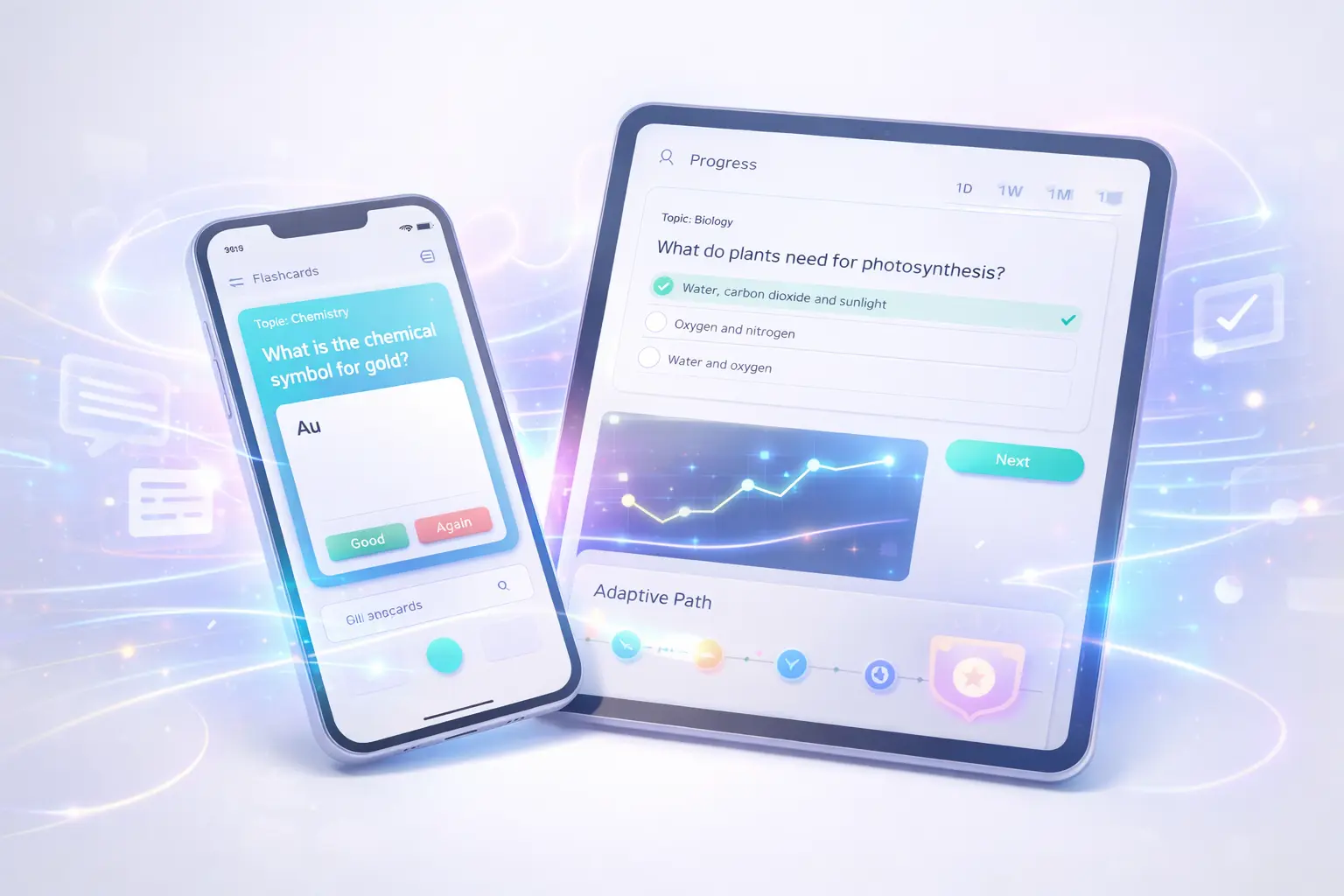
AI test generation is getting popular because it solves one of the most annoying parts of studying: turning material into practice. A lot of students do not only need content. They need a fast way to check what they know, what they forgot, and what might show up on the real exam. Quizlet has leaned hard into this with its AI Test Generator, which creates personalized practice tests from notes, readings, or slides, and its broader AI study tools can turn materials into study guides, flashcards, and practice tests.
That is a big deal because it removes the blank-page problem. Instead of spending twenty minutes figuring out how to start revising, the student can upload material and instantly begin. It also opens strong product opportunities for EdTech companies. Practice tests are one of those features people understand right away, and they are often willing to pay for them because the value is obvious. If the app can quickly generate good questions, adjust difficulty, and show weak areas, it becomes useful in a very practical way. This is also why tools like Khanmigo promote quiz and assessment generation for education use cases. For any team building a custom AI learning app, AI test generation for learning apps is quickly becoming one of the most valuable premium features.
How Gamification Improves Student Engagement and Learning Retention
Gamification works because it adds movement to learning. It makes progress visible. It gives a reason to come back tomorrow. It breaks large goals into smaller wins that feel doable. That is one reason Duolingo keeps getting used as a benchmark in this space. In its 2026 Form 10-K, the company says its bite-sized lessons and gamification features motivate learners to come back each day to continue learning.
The important part is that good gamification does not need to feel childish. It can be a streak, a level system, a challenge round, a timed review, a reward for consistency, or a visual sign that the learner is getting stronger in a topic. When it is done well, it supports motivation without distracting from the subject. The market signal here is strong too: the game-based learning market is projected to grow at a 22.0% CAGR from 2024 to 2030, driven by demand for more interactive and immersive learning experiences, including those using AI. This is exactly why gamification in education apps has become a key part of EdTech software development services and modern AI-powered learning platforms.
What Students Expect From Modern AI-Powered Learning Apps
Students now expect learning apps to feel responsive, quick, and personal. They do not want to scroll through a giant content library and figure everything out alone. They expect the app to help. That means real-time feedback, adaptive study recommendations, personalized tests, and a clear sense of where they are making progress. Quizlet’s positioning around AI-powered learning tools reflects exactly this shift: learners can upload study materials and quickly get practice resources shaped around those inputs.
There is also a style expectation now. Students compare learning apps to the best digital products on their phones, not just to older EdTech platforms. If the experience feels clunky, dry, or slow, they leave. If it feels clear and alive, they stay longer. Personally, I think this is why AI plus gamification works so well together. AI handles the smart part. Gamification handles the energy. One helps the app think. The other helps the learner keep going on days when motivation is low and the textbook is absolutely not giving main character energy. For founders investing in mobile app development for education, this matters a lot because users now expect a product that feels more like a smart assistant than a digital textbook.

Why Adaptive Learning Paths Work Better Than Static Lesson Plans
Static lesson plans treat every student like they are in the same place, moving at the same speed, with the same problems. Real learning does not work like that. Some students need repetition. Some need a different explanation. Some are ready to move on much earlier. Adaptive learning paths are better because they can react to those differences and keep the pace closer to what the student actually needs. Grand View Research points to AI-driven adaptive learning as a major contributor to EdTech growth, and the OECD has described how personalized learning technologies can help teachers respond to student needs more effectively.
This also matters emotionally. Students are much more likely to return when the next task feels achievable. Too hard, and they freeze. Too easy, and they check out. The best adaptive systems help create that middle zone where progress feels possible. Duolingo and Khanmigo both reflect this broader trend in different ways: Duolingo with daily bite-sized, motivating progression, and Khanmigo with guided support designed to help learners find answers instead of simply receiving them. This is where custom education software development can make a real difference, because strong adaptive logic is one of the things that separates average products from the best AI-powered learning platforms.
How Teachers and Parents Use AI Learning Tools to Save Time
One thing founders sometimes miss is that the learner is not always the buyer. In EdTech, teachers, parents, and schools often have a huge influence on adoption. That means a strong product should not only engage students. It should also save time for adults who support them. Khan Academy’s recent materials position Khanmigo as both a personal tutor for students and a teaching assistant for educators, with examples that include lesson support, prep help, and assessment-related tools. Khan Academy has also highlighted updates for teachers around practical AI-ready classroom use.
That is where AI gets commercially interesting. Parents care when a child feels less frustrated and studies more consistently. Teachers care when prep time drops and differentiation becomes easier. Schools care when support can scale without lowering quality. When an AI learning app helps all three groups in one product, it becomes much easier to position, sell, and grow. UNESCO has also emphasized the role of teachers in using AI to enhance personalized learning responsibly, which is a useful reminder that the best AI education tools support human teaching rather than trying to erase it. This is one reason why founders looking for an EdTech app development company often want a partner that understands both student engagement and the real workflow of educators.
How to Choose an Agency for AI EdTech App Development - Why Olearis
If you are building an AI EdTech product, the first thing to look for in an agency is not just technical AI knowledge. It is whether the team understands learning behavior. A good partner should know how adaptive learning works, how to shape gamification without making it silly, how to build AI test generation into a clean user flow, and how to balance student needs with teacher and parent expectations. This market is growing fast, and products that feel generic will have a hard time standing out when both personalized learning and game-based learning are rising so quickly.
At Olearis, we like products that feel useful from the first session and easy to return to on the fifth, tenth, and fiftieth. We focus on adaptive logic, study flow, motivation loops, UX clarity, and the little details that make a learning app feel supportive instead of heavy. As an EdTech app development company providing AI EdTech app development, eLearning app development services, and custom education software development, we help founders shape products that feel smart, engaging, and genuinely helpful. If you want to build an AI-powered education app with personalized learning, AI test generation, and gamification that students actually enjoy using, Olearis is the kind of team you can talk to early. A good idea deserves more than a content dump with a chatbot on top. It deserves a product people want to keep opening.
The direction of the market is pretty clear. Students want learning tools that adjust to their level, help them prepare faster, and make progress feel visible. Teachers and parents want support that saves time and lowers stress. And founders need products that connect all of that in one smart experience. That is exactly why this space is so interesting right now. AI is finally making personalized education feel possible at scale, and gamification is helping it feel alive. If that is the kind of product you want to build, Olearis would love to help shape it with you.